Short answer for category planning
Cast iron cookware is often better for brands that want visual weight, heat retention, color collections, giftable products, and premium storytelling. Stainless steel cookware is often better for brands that want lighter daily-use cookware, modern kitchen positioning, and broad retail acceptance. The right choice depends on your target customer, price band, product line strategy, shipping model, and customization plan.
For OEM buyers, the question is not simply “which material is better?” It is “which product category can my brand sell, support, package, and repeat successfully?”
Category positioning
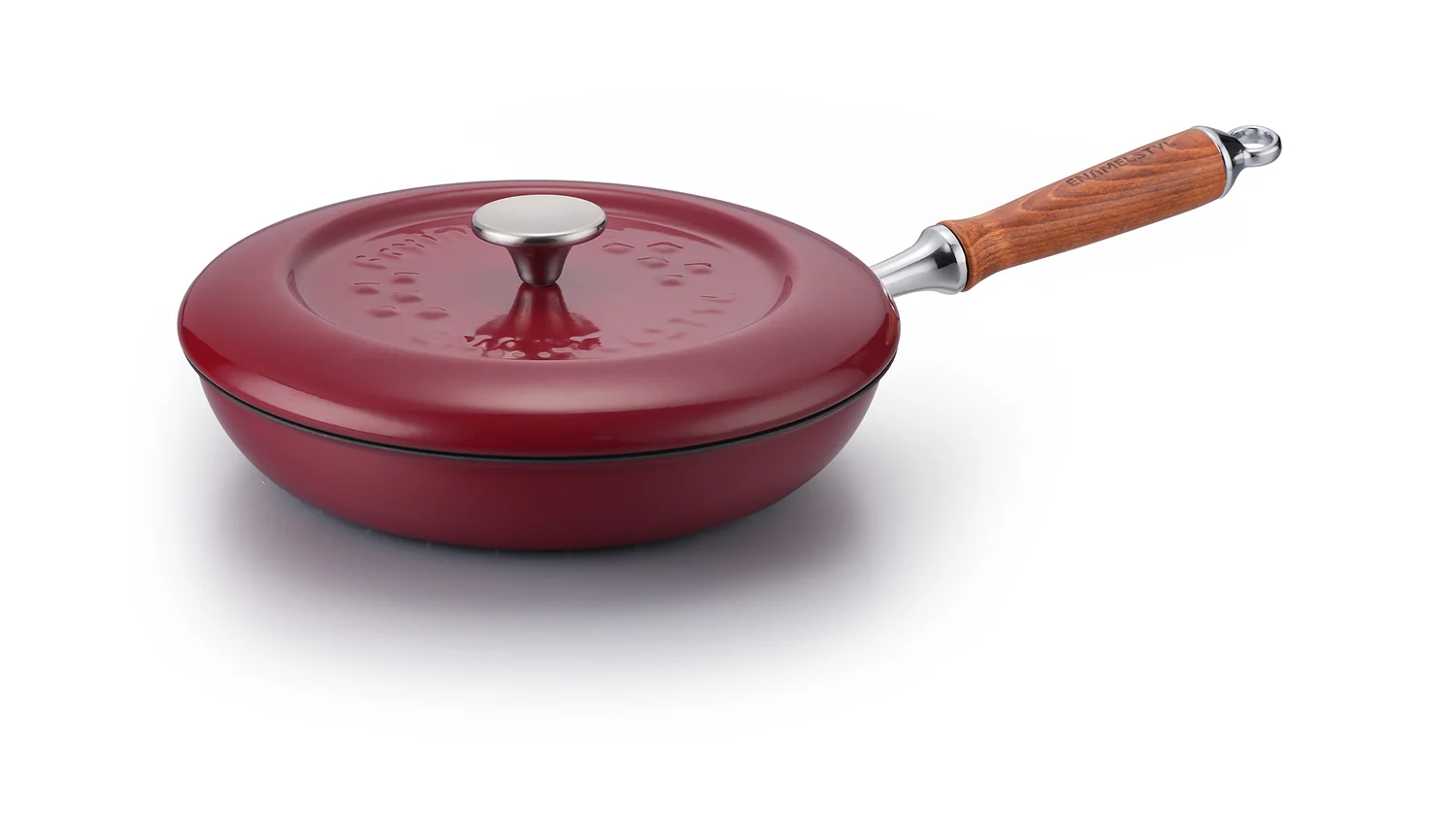
Cast iron cookware has a strong emotional and visual identity. Enameled cast iron Dutch ovens, casseroles, skillets, grill pans, and braisers work well as hero products. They are heavy, durable-looking, colorful, and suitable for premium kitchen collections.
Stainless steel cookware has a different value. It is often positioned around daily cooking, clean design, induction compatibility, material grade, and cookware sets. Stainless steel products can be easier for buyers who want a lighter, modern, and broad-range collection.
Manufacturing differences
The manufacturing concerns are different.
| Area | Cast iron cookware | Stainless steel cookware |
|---|---|---|
| Core process | Casting, surface preparation, coating or seasoning | Cutting, forming, polishing, bonding, assembly |
| Key appearance issue | Enamel color, surface finish, rim, lid fit | Polish, handle finish, body shape, bottom structure |
| Customization | Color, knob, logo, packaging, mold | Material grade, handle, lid, polish, structure |
| Weight | Heavy | Usually lighter |
| Packaging concern | Protection for heavy products | Protection against scratches and deformation |
| Brand story | Traditional, durable, premium, colorful | Modern, practical, clean, technical |
These differences affect sampling, inspection, packaging, and cost.
Buyer expectations
Cast iron buyers often look for strong heat retention, oven-to-table presentation, and attractive color. The product can become a centerpiece in a kitchen or retail display. For this reason, color and packaging are important.
Stainless steel buyers often focus on cooking performance, easy cleaning, compatibility, and construction. Product claims may involve material grade, base construction, handle design, and set composition.
If your brand is new, choose the category that your customers can understand quickly. A beautiful enameled Dutch oven can create strong visual marketing, while a stainless steel set may require more explanation about construction and grade.
MOQ and cost considerations
Cost depends on size, weight, material, finish, packaging, and quantity. Cast iron cookware can have higher shipping pressure because of weight. Stainless steel cookware may involve more variation in material grade and structure.
For cast iron:
- Heavier products increase freight and packaging demands.
- Custom enamel color may require sample approval.
- Retail packaging needs strong protection.
- Product defects are often visually obvious.
For stainless steel:
- Material grade affects positioning and cost.
- Multi-ply or clad construction changes pricing.
- Polishing and handle assembly matter.
- Sets need careful SKU planning.
Which category is better for private label?
Both can work for private label, but they suit different strategies.
Choose enameled cast iron if:
- You want a premium, giftable product.
- You need strong color differentiation.
- You sell through lifestyle, kitchenware, or home channels.
- You want a smaller line with strong hero products.
- You can handle heavier shipping and packaging.
Choose stainless steel if:
- You want daily-use cookware.
- You plan sets or multiple SKUs.
- You want a modern look and broad market.
- Your customers care about material grade and construction.
- You need lighter products for some channels.
Packaging and channel fit
Cast iron packaging must protect heavy cookware and present the brand well. Gift boxes, inserts, manuals, and color labels can add value. For e-commerce, impact protection is important.
Stainless steel packaging often focuses on set organization, scratch prevention, and clear feature communication. Retail buyers may need product comparison points such as grade, coating, lid type, and induction compatibility.
Quality control priorities
For cast iron cookware, inspect:
- Enamel coverage and color consistency.
- Surface defects.
- Lid fit and rim finish.
- Handle and knob assembly.
- Packaging protection.
For stainless steel cookware, inspect:
- Material and construction details.
- Polish and scratches.
- Handle strength.
- Lid fit.
- Bottom flatness and compatibility.
- Packaging and set completeness.
Category planning takeaway
Sancong Eco Enamel focuses this site on enameled cast iron cookware sourcing. Stainless steel is still important in broader cookware strategy, but the best fit for this entry site is buyers planning Dutch ovens, casseroles, skillets, grill pans, and braisers with custom color and private label packaging.
Related category guides
If you are leaning toward cast iron, review Dutch ovens, casseroles, skillets, and OEM service.
Final recommendation for product selection
Choose cast iron when visual identity, color, and premium positioning matter most. Choose stainless steel when daily-use practicality, sets, and technical material claims matter more. For a new brand, start with the category that gives you the clearest customer promise and the simplest first launch.
Need a factory quote?
Share your cookware project details
Send your target product, quantity, color, packaging, and market requirements. The Sancong Eco Enamel team will review the project and reply by email.