Buyer takeaway
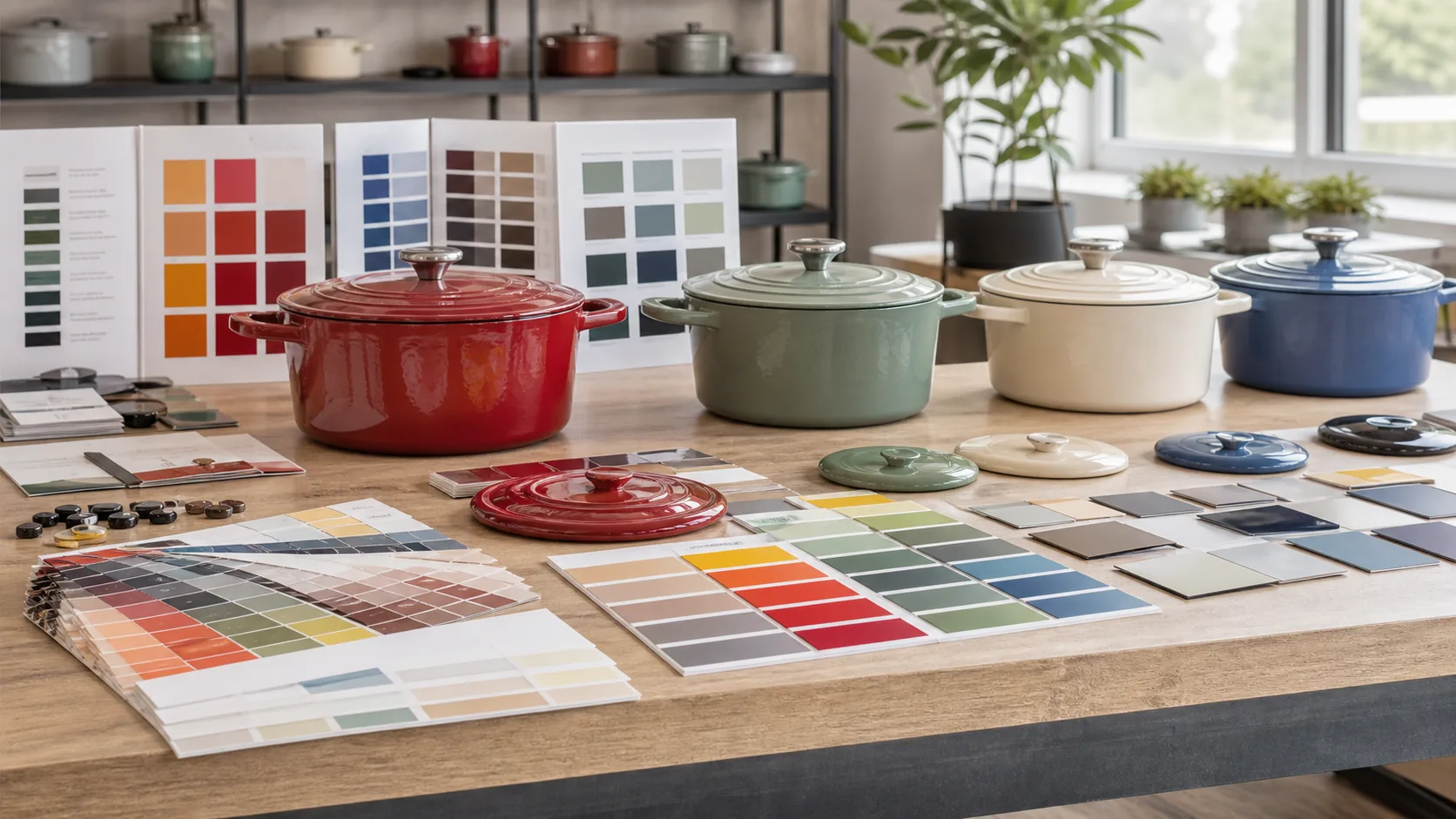
Custom enamel color development should start with a real reference and end with physical sample approval. Buyers should not approve final color only from a phone screen, catalog photo, or Pantone number.
Choose the right reference
Pantone codes, color chips, physical cookware samples, and brand material samples can all help. A physical reference is usually stronger than a digital image because enamel changes with surface, shape, lighting, and firing.
Confirm color scope
Decide whether the color applies to the exterior, interior, lid, knob, full cookware set, or packaging artwork. Matching a Dutch oven, casserole, and skillet may require more review than approving one item.
Approval checklist
- Send one primary color reference.
- Confirm exterior and interior color separately.
- Review sample photos under clear lighting.
- Approve a physical sample for important launches.
- Compare packaging artwork with cookware color.
- Record the approved sample for repeat orders.
Common risks
Very light colors can reveal surface details differently. Very dark colors can show dust, scratches, or contrast more clearly. Special effects may need extra testing and may not suit every cookware shape.
Related service page
Use the full custom enamel colors service page before preparing an RFQ. For final sample review, see sample development.
Need a factory quote?
Share your cookware project details
Send your target product, quantity, color, packaging, and market requirements. The Sancong Eco Enamel team will review the project and reply by email.