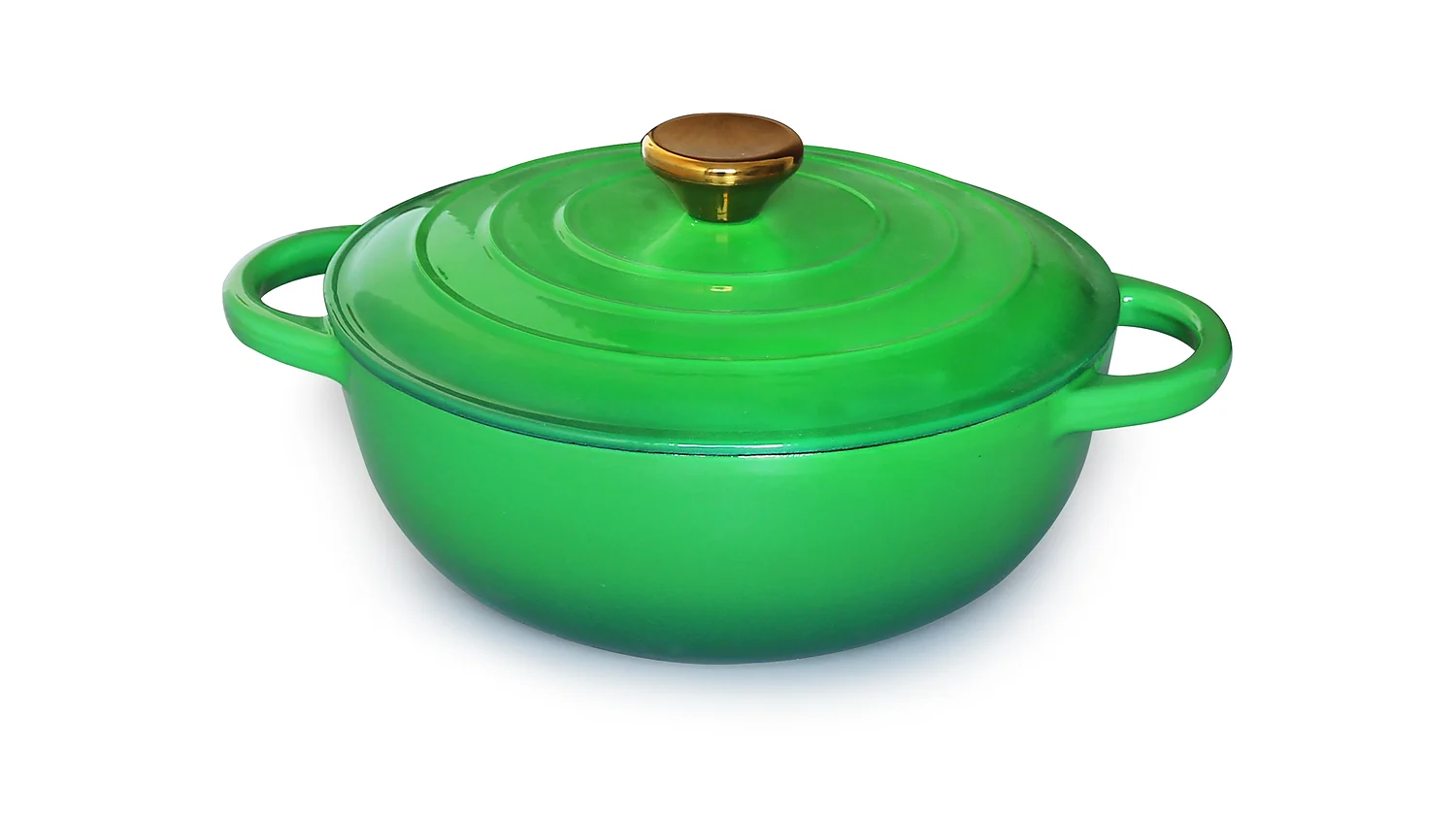
Color approval starts with a real reference
Custom enamel color development starts with a clear reference, then moves through feasibility review, sample preparation, buyer approval, production control, and repeat-order recording. Buyers should approve physical samples, not only digital color references, because enamel color can look different across lighting, product shape, and firing conditions.
Choose the right color reference
A Pantone code is useful, but a physical product sample is often clearer. If your brand already has a color system, provide the closest real object or approved color chip.
Decide color scope
Confirm whether the custom color applies to exterior only, interior only, lid, knob, or a full cookware collection. Matching a Dutch oven, casserole, and skillet may need additional review.
Sample approval
Ask for sample photos and, when important, a physical sample. Review color, gloss, surface consistency, and how the color looks on handles, rim areas, and lid details.
Repeat order control
For future orders, record approved sample references. If the product line expands, confirm whether the same color can work across different shapes.
Common risks
Digital screens can mislead color approval. Very light or very dark colors can show surface issues differently. Special effects may require more testing.
Buyer approval workflow
A reliable custom color workflow should move from reference to feasibility check, lab or sample preparation, photo review, physical sample approval, production reference, and repeat-order record. Buyers should name one final decision maker for color approval. If multiple teams comment separately, the project can lose time and the factory may receive conflicting feedback.
For enameled cast iron cookware, review the color on real product shapes when possible. Curved lids, handles, rims, and side walls reflect light differently. A color that looks good on a flat chip may look warmer, darker, or glossier on a Dutch oven body.
How color affects cost and MOQ
Custom color can affect MOQ, sample cost, and lead time. Standard colors are usually easier. Seasonal colors, gradient looks, special matte effects, or exact brand matching may need more testing. If your first order is small, ask the manufacturer which colors are realistic at your quantity.
Color development takeaway
Custom enamel color development for cast iron cookware requires a physical color reference, sample approval, lighting review, production record, and repeat-order control. Buyers should approve real samples rather than relying only on screen images or Pantone numbers.
Keep a production color record
Send the supplier one primary color reference and one backup direction. Ask whether the target color is realistic for the product shape, finish, and order quantity. When samples arrive, review them in daylight and indoor lighting, then record the approved sample with photos and written notes.
For future orders, refer to the approved physical sample rather than starting color discussion again. This helps repeat production stay closer to the original brand color.
Related enamel color guides
Review OEM service, Dutch oven product options, and quality control.
Final recommendation on custom colors
Treat custom enamel color as a product development step. Clear references and physical sample approval reduce risk and make repeat orders easier.
Need a factory quote?
Share your cookware project details
Send your target product, quantity, color, packaging, and market requirements. The Sancong Eco Enamel team will review the project and reply by email.