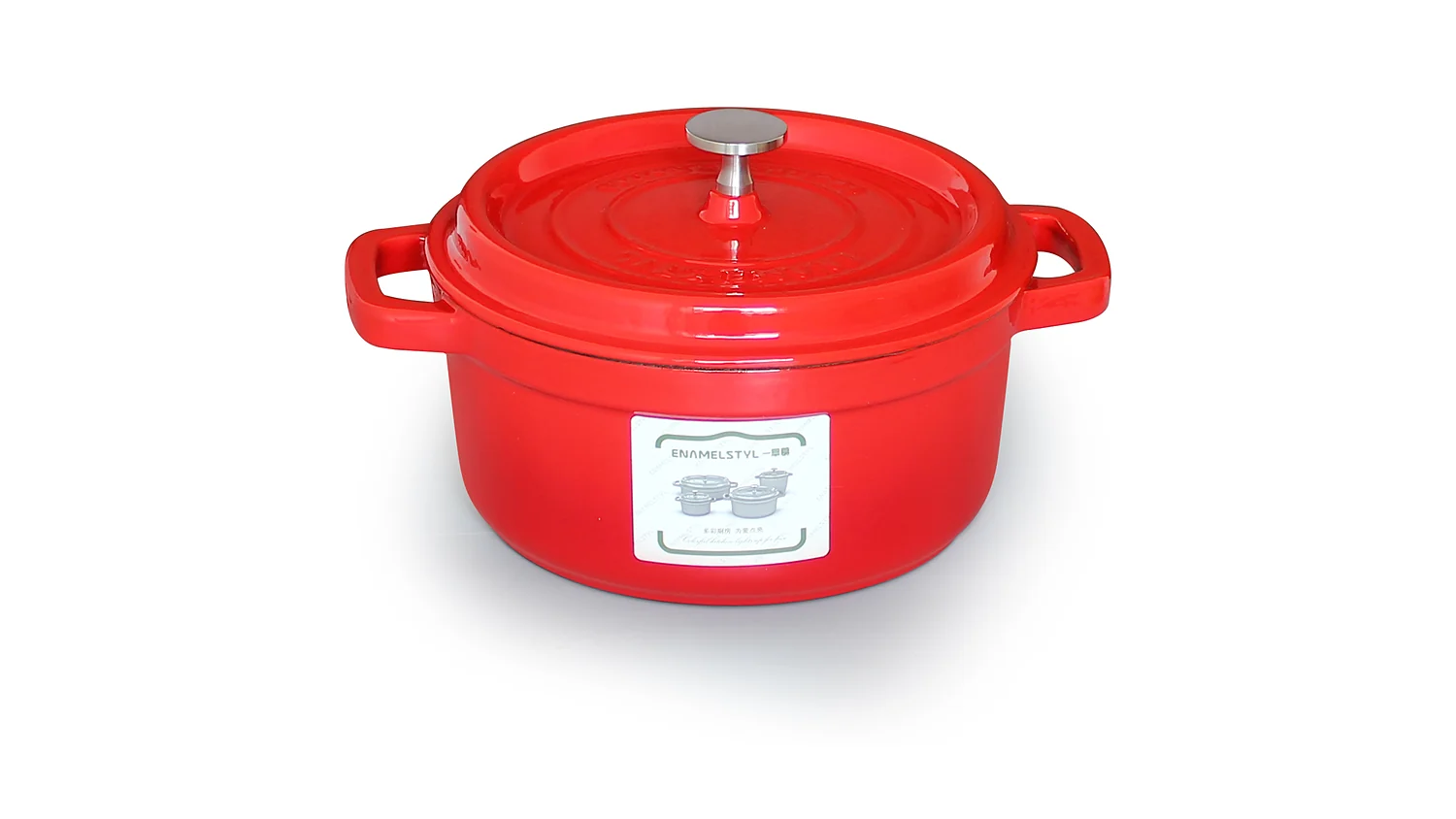
Choose by customer expectation
Enameled cast iron is usually better for cookware brands that want color, giftable presentation, easier consumer care, and premium retail positioning. Bare cast iron is better for brands focused on traditional seasoning, outdoor use, lower visual complexity, and rugged cooking stories. The best choice depends on your target customer, channel, price band, and after-sales expectations.
Manufacturing difference
Both categories start from cast iron bodies, but the finish strategy is different. Enameled cast iron requires surface preparation, enamel coating, firing, color approval, and appearance inspection. Bare cast iron focuses more on seasoning, oil coating, rust prevention, and surface feel.
| Point | Enameled cast iron | Bare cast iron |
|---|---|---|
| Finish | Enamel coating | Seasoned or pre-seasoned surface |
| Brand value | Color and premium look | Traditional and rugged look |
| User care | Easier for many consumers | Requires seasoning care |
| QC focus | Color, coating, lid fit, surface appearance | Seasoning, rust prevention, casting surface |
| Packaging | Often retail/gift focused | Often rugged or functional |
Buyer positioning
Choose enameled cast iron if your customers want cookware that looks good on a table, supports seasonal colors, and fits premium kitchen branding. Choose bare cast iron if your brand serves outdoor, camping, barbecue, or traditional cooking customers who understand seasoning and maintenance.
Cost and MOQ notes
Enameled products may need more work around color matching, sample approval, and surface inspection. Bare cast iron may look simpler, but rust prevention, oiling, packaging, and storage still need control.
RFQ checklist
Tell the manufacturer your target customer, channel, size range, finish, packaging style, and maintenance expectations. If you choose enameled cast iron, include color references. If you choose bare cast iron, clarify seasoning and rust-prevention requirements.
Packaging and customer education
Enameled cast iron usually needs packaging that presents color, premium feel, and care guidance. The insert should explain heating, cleaning, storage, and how to avoid thermal shock or surface damage. Bare cast iron packaging should focus more on seasoning, rust prevention, oiling, and the customer’s role in maintenance.
If your customer base is new to cast iron, enameled cookware can reduce friction because it looks familiar and giftable. If your customer base is outdoor, barbecue, or traditional cooking focused, bare cast iron may create a stronger product story.
Cast iron finish takeaway
Enameled cast iron is best for colorful private label cookware, premium retail, gifting, and easier consumer care. Bare cast iron is best for traditional cooking, outdoor use, seasoning culture, and rugged positioning. The choice affects manufacturing process, QC focus, packaging, and after-sales education.
Compare using real channel assumptions
Compare the two categories with the same commercial assumptions: target retail price, expected customer, packaging level, care education, and return risk. Do not compare a premium enameled Dutch oven against a basic bare cast iron skillet and call it a material-only decision.
If the first product is for a new brand, choose the finish that is easiest to explain to your customer. Clear customer education usually matters more than offering every possible cast iron option.
Related cast iron guides
Review Dutch ovens, skillets, quality control, and OEM service.
Final recommendation on cast iron finish
For private label kitchenware brands, enameled cast iron is often easier to position visually. For outdoor and traditional cooking brands, bare cast iron can be more authentic. Choose the finish that matches your customer story and operational ability.
Need a factory quote?
Share your cookware project details
Send your target product, quantity, color, packaging, and market requirements. The Sancong Eco Enamel team will review the project and reply by email.