Buyer takeaway
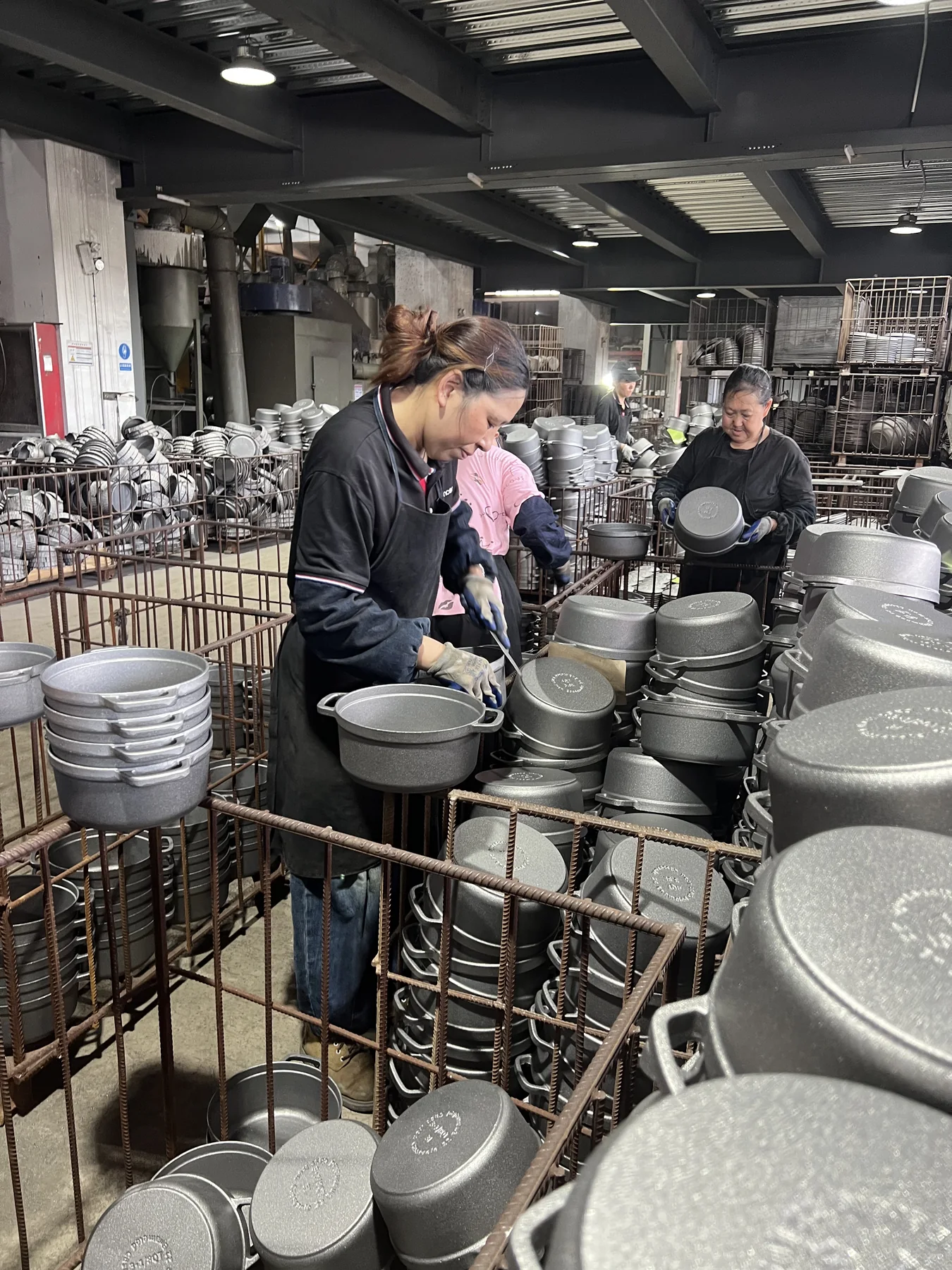
Enameled cast iron cookware is made through casting, surface preparation, enamel application, firing, inspection, and packing. For OEM buyers, the key is not only the process itself but how each step is controlled before shipment.
Main production stages
The workflow usually begins with cast iron bodies made to confirmed shapes and sizes. After casting, the surface must be prepared so the enamel finish can apply more consistently. Edges, rims, handles, and lid contact areas need attention because they are visible and functional points.
Enamel is then applied according to the approved color and finish. The cookware moves through firing so the enamel bonds to the cast iron surface. After cooling, the product is inspected for color, surface appearance, lid fit, and handling issues.
What buyers should ask
Ask where the supplier controls color, how samples are approved, whether the same color can be repeated, and which defects are checked before packing. For private label projects, also confirm whether packaging is checked together with product quality.
Buyer decision table
| Stage | Buyer concern |
|---|---|
| Casting | Shape, weight, handle design, lid fit |
| Surface preparation | Smoothness, rim quality, visible defects |
| Enamel application | Color, coverage, finish expectation |
| Firing | Bonding, consistency, appearance |
| Inspection | Surface, assembly, packaging, carton protection |
Related pages
See factory capability, quality control, custom enamel colors, and Dutch oven options.
Need a factory quote?
Share your cookware project details
Send your target product, quantity, color, packaging, and market requirements. The Sancong Eco Enamel team will review the project and reply by email.