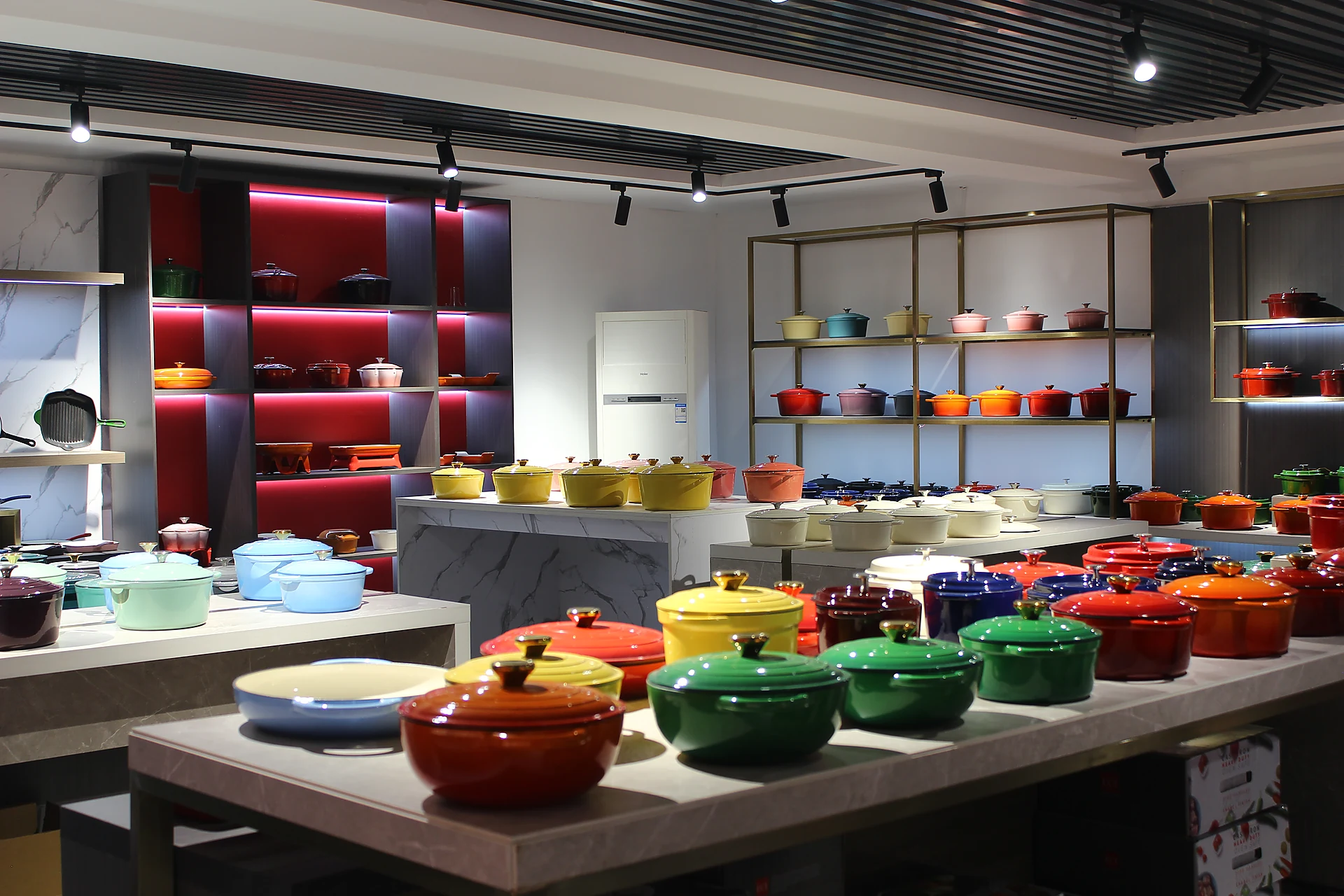
What a good manufacturer should prove
The right Dutch oven manufacturer in China should be able to explain its manufacturing role, available shapes, enamel color process, sample workflow, quality checks, packaging options, and export communication before asking you to confirm an order. For brand buyers, the decision is not only about unit price. It is about whether the supplier can help you launch a stable product line with repeatable color, acceptable finish, protective packaging, and clear production timing.
Sancong Eco Enamel is an SEO entry website powered by Sancong Kitchenware. The purpose of this page is to help cookware brands, importers, and private label buyers evaluate a potential enameled cast iron Dutch oven supplier with practical questions.
Confirm the supplier’s manufacturing role
Start by asking whether the company is a manufacturer, trading company, sourcing agent, or mixed operation. This matters because a Dutch oven project includes several physical details: casting, surface preparation, enamel coating, firing, lid fit, knob selection, inspection, and packing. A supplier that only handles trading may still be useful, but the buyer should know who controls production decisions.
Useful questions:
- Are you the factory, a trading company, or both?
- Who confirms enamel color feasibility?
- Who checks lid fit, rim finish, and final packaging?
- Can you support repeat orders using the same color and packaging references?
- Which product details must be confirmed before sample development?
For a Sancong matrix site, ownership should be clear: the entry site is powered by Sancong Kitchenware and does not represent a separate factory.
Evaluate product range and tooling options
Most Dutch oven programs start from existing round and oval shapes. Existing tooling is usually faster and easier for a new buyer because sample timing, weight, capacity, lid fit, and packaging dimensions are already easier to estimate. Custom tooling can make sense when the buyer needs a distinctive handle, lid profile, body shape, or size that is not available in the current range.
When comparing suppliers, ask for a product table that includes:
| Item | Why it matters |
|---|---|
| Capacity and size | Affects retail positioning, freight cost, and cookware set planning |
| Shape | Round and oval Dutch ovens serve different cooking and display needs |
| Weight | Impacts shipping, carton strength, and buyer expectations |
| Lid and knob options | Important for brand look and user experience |
| Existing colors | Helps shorten sample development |
| Custom color process | Needed for private label collections |
If you are still testing the market, begin with one or two core sizes before building a wide collection.
Ask how enamel colors are developed
Custom enamel color is one of the main reasons brands source enameled cast iron Dutch ovens. The challenge is that color approval is not the same as choosing a screen color. Buyers should expect sample panels or product samples because enamel appearance can vary by surface, lighting, and firing conditions.
Before approving a color, clarify:
- Whether you are matching Pantone, a physical sample, or an existing product.
- Whether exterior and interior colors are both customized.
- Whether the finish is glossy, matte, or special effect.
- Whether the same color will be used across Dutch ovens, casseroles, skillets, or grill pans.
- How color references will be recorded for repeat production.
For multi-product cookware lines, choose colors that can work across several shapes and sizes. A beautiful hero Dutch oven color may not always translate well to narrow handles or smaller cookware pieces.
Review sample workflow before discussing mass production
A serious OEM Dutch oven manufacturer should not rush directly to mass production. Sample confirmation protects both sides. The buyer can review appearance, color, lid fit, weight, knob, packaging artwork, carton structure, and any logo placement before production starts.
A practical sample workflow usually includes:
- Requirement confirmation: product type, size, color, logo, packaging, quantity, and destination market.
- Feasibility review: existing mold or new tooling, color matching, packaging direction, and compliance questions.
- Sample preparation: product sample or reference sample depending on the customization depth.
- Buyer review: photo/video review, physical sample review, or both.
- Final confirmation: approved color, packaging, and production details are recorded before bulk order.
Ask what can be changed after sample approval and what cannot. Changing packaging may be easier than changing product body shape after production starts.
Check quality control points
Enameled cast iron cookware needs practical inspection because buyers care about both function and shelf appearance. Dutch ovens are heavy, giftable, and often used as hero products in a cookware line. Visible defects can affect retail confidence.
Important QC points include:
- Body surface preparation before enamel.
- Enamel coverage, color consistency, and visible finish.
- Rim condition and lid fit.
- Knob assembly and handle finish.
- Interior surface appearance.
- Product weight and capacity tolerance where required.
- Packaging protection for heavy cookware.
- Carton labels, barcode, instruction sheet, and buyer-specific marks.
For export programs, ask whether the supplier can provide inspection photos, packing photos, and document support before shipment.
Compare packaging capability
Dutch oven packaging is not only a design issue. It protects a heavy, brittle-finish product through handling and transportation. A good supplier should be able to discuss inner protection, retail box structure, master carton strength, pallet planning, and labeling requirements.
Private label buyers should prepare:
- Logo files and packaging artwork direction.
- Retail box size or shelf requirements.
- Barcode and carton mark rules.
- Instruction manual or insert needs.
- Destination market compliance notes.
- E-commerce shipping expectations if relevant.
If you sell through Amazon, DTC, or retail chains, tell the supplier early. Packaging needs differ by channel.
Understand MOQ and price drivers
MOQ depends on size, color, packaging, customization depth, and production schedule. A simple existing-shape Dutch oven with standard color and carton may have a different MOQ from a fully custom color line with retail packaging.
Common price drivers:
- Product size and weight.
- Existing mold vs new mold.
- Standard color vs custom enamel color.
- Simple carton vs retail box or gift box.
- Logo, insert, and labeling requirements.
- Order quantity and production timing.
- Inspection and documentation requirements.
- Destination market and shipment terms.
When requesting a quote, avoid asking only for “best price.” A better RFQ includes target product, size, color, packaging, quantity, destination market, and launch timeline.
Red flags when choosing a supplier
Be careful if a supplier cannot explain sample timing, avoids quality questions, uses vague factory claims, or quotes without asking for product details. Low price can be useful only when the supplier can still support repeatable finish and reliable communication.
Red flags include:
- No clear answer about factory role.
- No discussion of packaging protection.
- No sample approval workflow.
- No clear MOQ logic.
- No practical answer about color matching.
- Generic product photos without product details.
- Unclear communication about export documents.
Related Dutch oven sourcing guides for next steps
To continue your supplier evaluation, review Sancong Eco Enamel’s OEM service, factory capability, quality control, and Dutch oven product page.
RFQ checklist
Before contacting a Dutch oven manufacturer, prepare:
- Product type: round, oval, or specialty Dutch oven.
- Size or capacity target.
- Color direction and finish expectation.
- Logo and packaging requirements.
- Estimated quantity.
- Destination market.
- Required certificates or documents.
- Sample deadline and launch date.
Final recommendation for manufacturer selection
Choose a Dutch oven manufacturer that can explain the full buyer journey from idea to sample, production, inspection, packing, and shipment. For brand owners, the best supplier is not simply the cheapest factory. It is the partner that helps you reduce launch risk, protect brand presentation, and repeat the product successfully in future orders.
Need a factory quote?
Share your cookware project details
Send your target product, quantity, color, packaging, and market requirements. The Sancong Eco Enamel team will review the project and reply by email.