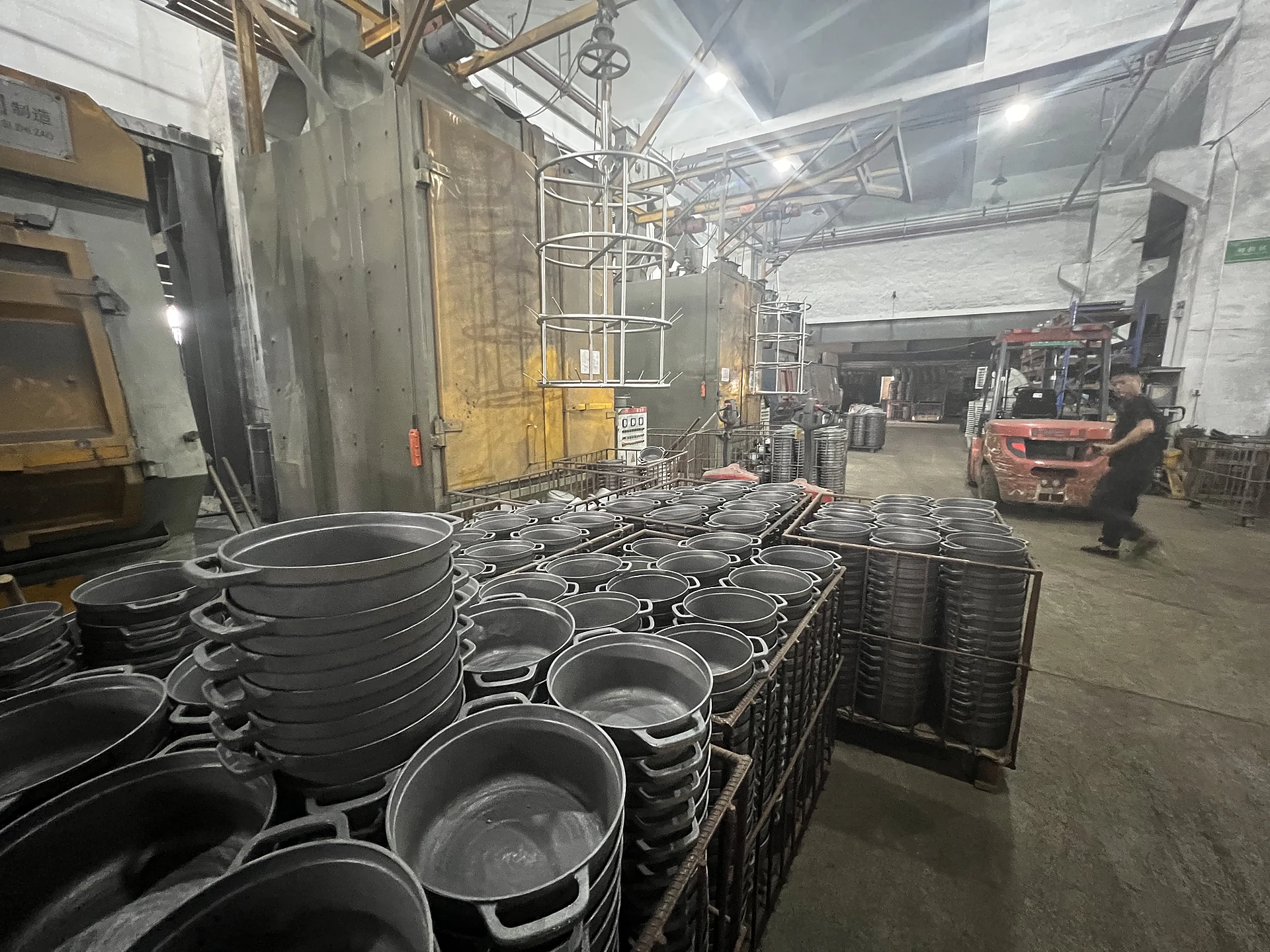
Private label starts with positioning
Private label cookware means selling cookware under your own brand while working with a manufacturer for product development, customization, packaging, and production. For new cookware brands, the safest path is to start with a focused product range, use existing molds where possible, customize color and packaging, approve samples carefully, and build a realistic launch timeline.
This guide is for brand owners, importers, Amazon sellers, DTC teams, and retail private label buyers planning their first cookware program.
Define your target customer
Before choosing cookware, define who will buy it. A premium home cook, gift buyer, outdoor customer, marketplace shopper, and retail chain buyer may all expect different products.
Ask:
- Is the customer buying for daily cooking or gifting?
- Does the customer care about color and design?
- Is the product sold online, in stores, or both?
- What price band must the product fit?
- How important are packaging and unboxing?
- What is the expected order quantity?
For enameled cast iron cookware, color, shape, weight, packaging, and perceived quality all influence the buying decision.
Start with a focused product line
New brands often want too many SKUs too early. A focused product line is easier to manage, photograph, stock, and promote.
For enameled cast iron, a beginner line might include:
- One round Dutch oven.
- One casserole or braiser.
- One skillet.
- One grill pan.
- One shared color family.
This creates a coherent collection without making the first order too complex.
Choose existing molds before custom molds
Existing molds reduce development time and cost. They are suitable when your main brand differentiation comes from color, packaging, photography, and positioning. Custom molds are useful later when your brand has demand and needs exclusive design.
Start with existing molds if:
- You are validating market demand.
- You need a faster launch.
- You want lower development risk.
- You mainly need custom color and packaging.
Consider custom molds if:
- You already have proven sales.
- You need exclusive product shape.
- You have a retail buyer requesting differentiation.
- You can invest in longer development.
Decide what to customize
Private label cookware customization can include product and packaging details. Not every detail needs to be custom in the first order.
Common options:
| Customization | Beginner advice |
|---|---|
| Exterior color | Strong brand impact; confirm with samples |
| Interior color | Keep practical and consistent |
| Knob or handle | Useful for premium positioning |
| Packaging artwork | Important for retail and online branding |
| Logo | Usually easiest on packaging first |
| Insert/manual | Helps user education and brand trust |
| Carton marks | Needed for logistics and retail handling |
For first orders, color and packaging usually deliver the most visible brand value.
Build your sample process
Samples are essential. They help confirm color, shape, finish, packaging, and buyer expectations before mass production.
Sample checklist:
- Product shape and capacity.
- Enamel color and surface finish.
- Lid fit.
- Weight and handling.
- Knob and accessory details.
- Packaging design and structure.
- Barcode and label requirements.
- Photos or videos for internal review.
Do not approve mass production based only on a digital mockup when color and finish matter.
Understand MOQ
MOQ depends on product type, color, packaging, and production schedule. A custom color or private label box may require a higher MOQ than a standard product.
New brands should ask:
- What is the MOQ for existing color?
- What is the MOQ for custom color?
- Does packaging change MOQ?
- Can products share the same packaging style?
- What quantity improves cost?
- Is a trial order possible?
MOQ should be considered together with inventory risk. A very low unit price is not useful if the first order is too large for your sales channel.
Plan packaging early
Packaging is part of the product. It affects shipping protection, retail presentation, customer experience, and compliance information.
Prepare:
- Brand logo files.
- Box style preference.
- Product name and size.
- Barcode requirements.
- Care instructions.
- Destination market language.
- Retail or e-commerce channel needs.
For heavy cast iron cookware, packaging must protect the product as well as sell the product.
Build a launch timeline
A private label cookware launch includes more than manufacturing. Buyers should plan backward from the target sales date.
Typical timeline stages:
- Product selection.
- Quotation and supplier discussion.
- Sample development.
- Packaging artwork.
- Sample approval.
- Mass production.
- Inspection and packing.
- Shipment.
- Photography and listing content.
- Launch.
Leave time for revisions. Color, packaging, and shipping details often need more coordination than expected.
Avoid common beginner mistakes
Common mistakes include:
- Launching too many SKUs at once.
- Choosing custom molds before validating demand.
- Approving color without a physical sample.
- Ignoring packaging strength.
- Asking for price without clear product details.
- Forgetting barcode, labels, or instruction inserts.
- Underestimating freight and inventory cost.
Related private label guides
Review OEM service, custom Dutch ovens, quality control, and factory capability while planning your first private label cookware program.
Final recommendation for private label cookware
For a beginner private label cookware brand, start narrow, make the product visually clear, confirm samples carefully, and use packaging to strengthen brand value. A focused first launch gives you better control over cost, quality, inventory, and customer feedback.
Need a factory quote?
Share your cookware project details
Send your target product, quantity, color, packaging, and market requirements. The Sancong Eco Enamel team will review the project and reply by email.