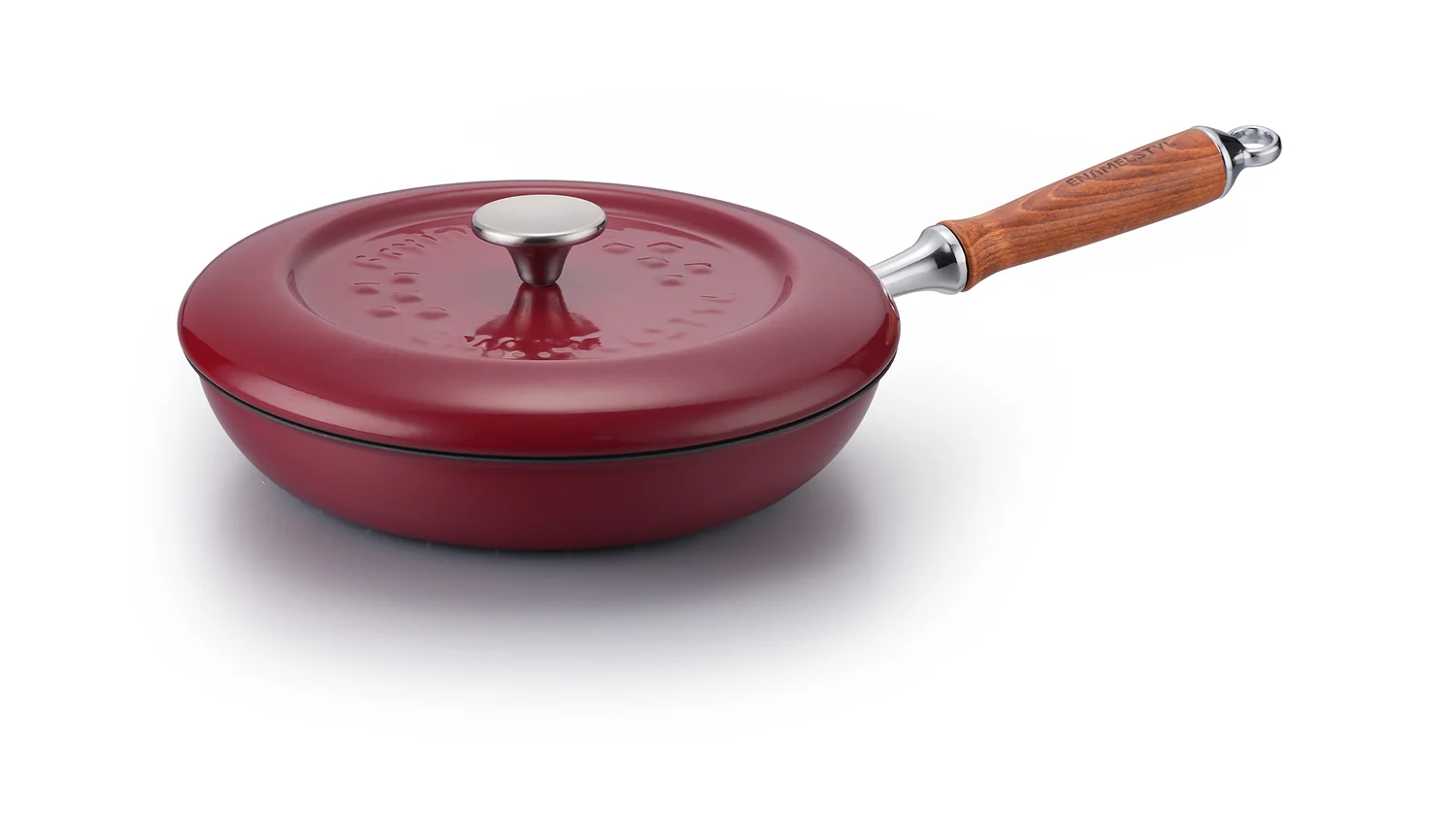
Choose by channel, not only finish
Enameled cast iron often sells better for premium kitchen and giftable cookware brands because it offers color and easier consumer care. Pre-seasoned cast iron may sell better for outdoor, traditional, barbecue, or value-driven cookware brands. The better choice depends on customer education and channel.
Consumer expectation
Enameled cookware feels more finished and colorful. Pre-seasoned cookware feels traditional and practical, but customers must understand seasoning and maintenance.
Brand positioning
Enameled products support color collections, lifestyle photography, and gift boxes. Pre-seasoned products support rugged cooking and outdoor stories.
Packaging
Enameled cookware often needs premium retail packaging. Pre-seasoned cookware needs strong care instructions to reduce customer complaints.
Quality focus
Enameled cookware needs coating and color inspection. Pre-seasoned cookware needs surface and rust-prevention control.
Which sells better by channel
For premium kitchen retail, DTC gifting, wedding registries, and color-led cookware collections, enameled cast iron is often easier to sell. It looks finished, photographs well, and gives the brand more color control. For outdoor stores, barbecue channels, camping brands, and traditional cooking communities, pre-seasoned cast iron may feel more authentic.
The buyer should also consider customer service. Pre-seasoned cookware requires more education about seasoning and rust prevention. Enameled cookware requires education about cleaning, heating, and avoiding thermal shock or impact damage. Neither option is maintenance-free; the difference is the type of education required.
RFQ details to compare
Ask for finish type, seasoning or enamel details, sample photos, packaging options, care insert content, MOQ, unit weight, and available documents. If comparing both categories, quote the same capacity and packaging level so the comparison is fair.
Sales positioning takeaway
Enameled cast iron usually sells better for premium kitchen, giftable, and color-focused cookware brands. Pre-seasoned cast iron suits outdoor, barbecue, traditional, and value-oriented buyers. The decision depends on channel, customer education, packaging, and quality-control focus.
Match finish to customer education
Compare the two options using your actual customer profile. If your customer wants low-maintenance color and giftable presentation, test enameled cast iron first. If your customer already understands seasoning and wants rugged cooking, test pre-seasoned cast iron.
Ask the supplier for care instructions and packaging examples for both options. The clearer option for your customer may be the better commercial choice even if the unit price is different.
Related cast iron comparison guides
Review enameled vs bare cast iron, skillet options, and quality control.
Final recommendation on pre-seasoned vs enameled
Choose enameled cast iron for visual brand value. Choose pre-seasoned cast iron for traditional or outdoor customers who accept maintenance.
Need a factory quote?
Share your cookware project details
Send your target product, quantity, color, packaging, and market requirements. The Sancong Eco Enamel team will review the project and reply by email.